
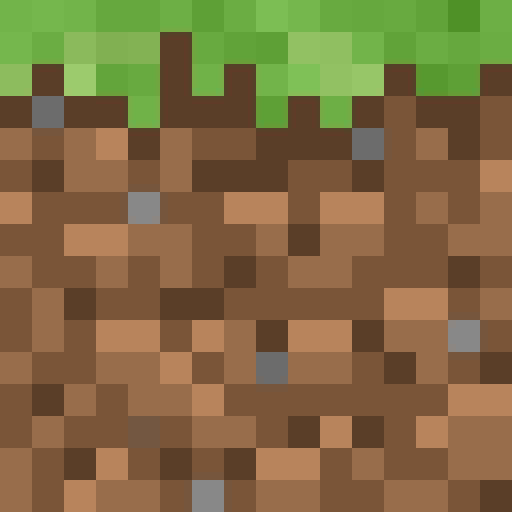
Biomes in Minecraft: a complete overview
A biome is a region of the Minecraft world with its own climate, terrain, vegetation and mobs. From tropical jungles to frozen mountain peaks, from the crimson forests of the Nether to the barren islands of the End, the game has over 60 biomes. Here's what you need to know about them.
What is a biome?
A biome in Minecraft is a region of the game world with a unique set of features: the type of terrain, vegetation, the color of grass and water, weather, mobs and generated structures. Every block in the world belongs to a biome.
Biomes affect practically everything:
- Terrain: mountains, plains, oceans, deserts. The shape of the land depends on the biome.
- Mobs: pandas in bamboo jungles, turtles on beaches, piglins in the Nether.
- Weather: it rains in most biomes, but not in deserts or badlands. Snow falls only in cold biomes.
- Structures: villages, temples, bastions. Each one generates only in certain biomes.
- Colors: grass, leaves and water come in different shades depending on the biome.
Overworld biomes
The Overworld (the normal world) has the widest variety of biomes. The main categories:
Plains and meadows
- Plains: flat terrain, villages, horses. The most common starting biome.
- Sunflower Plains: like plains, but with fields of sunflowers.
- Meadow: flowers, bees and a calm atmosphere. Generates on hills.
Forests
- Forest: oak and birch trees. The basic forest biome.
- Birch Forest: birches only. Bright and open.
- Dark Forest: dense dark oaks, mushrooms, woodland mansions.
- Taiga: spruces, wolves, foxes, sweet berries.
- Old growth forests: giant trees, moss.
Warm biomes
- Desert: sand, cacti, desert temples, villages.
- Savanna: acacias, dry terrain, villages.
- Jungle: the tallest trees, parrots, pandas, ocelots, cocoa beans.
- Badlands (formerly Mesa): terracotta, gold, sun-baked clay. A rare biome.
Cold biomes
- Snowy Taiga: spruces in the snow, white foxes.
- Snowy Plains: ice, polar bears, igloos.
- Ice Spikes: giant pillars of ice. A rare biome.
Oceans
- Ocean: the basic water biome, home to ocean monuments.
- Warm Ocean: coral reefs, tropical fish.
- Frozen Ocean: ice on the surface, polar bears.
Mountains
- Mountains: steep peaks, goats, emeralds, heights up to Y=256.
- Stony Peaks: bare rocky summits above the tree line.
- Frozen Peaks: ice and snow on the highest mountains.
Swamps and special biomes
- Swamp: lily pads, slimes, witch huts.
- Mangrove Swamp: mangrove trees growing in the water.
- Mushroom Fields: mooshrooms, huge mushrooms and no hostile mobs at all.
- Cherry Grove: pink cherry trees, added in 1.20.
Nether biomes
Since the 1.16 update, the Nether has had 5 biomes:
- Nether Wastes: the classic Nether biome, with netherrack, lava, ghasts and zombified piglins.
- Crimson Forest: red fungi, hoglins, piglins.
- Warped Forest: blue fungi, endermen, a safe biome.
- Soul Sand Valley: soul sand, ghasts, skeletons.
- Basalt Deltas: basalt, magma, magma cubes.
For a detailed guide to surviving the Nether, see our complete Nether guide.
End biomes
The End has 5 biomes, but less visual variety:
- The End: the main island, home of the Ender Dragon.
- End Highlands: the outer islands, with End cities and chorus plants.
- End Midlands: a transitional biome between the center and the islands.
- End Barrens: the bare edges of the islands.
- Small End Islands: small, empty islets.
More about the End: our complete End guide.
Cave biomes
Since version 1.18, Minecraft has biomes underground, independent of the biomes on the surface:
- Lush Caves: glow berries, azaleas, axolotls. An azalea tree on the surface shows you where one is.
- Dripstone Caves: stalactites and stalagmites made of pointed dripstone.
- Deep Dark: sculk, the Warden, ancient cities. The most dangerous cave biome, found from Y=-20 down to Y=-64.
How to find a specific biome
Three ways to locate a biome:
- The /locate biome command: type
/locate biome minecraft:biome_name(for example/locate biome minecraft:jungle). It works in Creative mode or with cheats enabled and gives you the coordinates of the nearest biome of that type. - Chunkbase.com: an online tool. Enter your world seed and the map shows where every biome is. It works without cheats: all you need is the seed (
/seedin the game). - Exploring: the classic method. Biomes generate in logical climate zones, with warm biomes next to warm ones and cold next to cold. If you keep walking in one direction, you'll eventually reach a different climate zone.
More details: How to find a biome in Minecraft.
The rarest biomes
Some biomes generate very rarely, and finding them is a challenge:
Mushroom Fields
The rarest biome in the game. It generates as an island surrounded by deep ocean. Huge mushrooms, mooshrooms and no hostile mob spawns at all: a perfect place for a base, but extremely hard to find. Sometimes it's thousands of blocks from spawn.
Ice Spikes
A variant of the snowy plains with giant pillars of ice up to 50 blocks tall. Purely visual: no unique mobs or resources, but it looks spectacular. It generates rarely, inside the cold zones.
Bamboo Jungle
A dense jungle full of bamboo. Pandas spawn here. It generates as a small patch inside a regular jungle: the jungle itself is already rare, and the bamboo version is even rarer.
Eroded Badlands
A badlands variant with dramatic terracotta spires that look like the Grand Canyon. Gold generates higher than usual. One of the most photogenic places in the game.
Biome mechanics: temperature and humidity
Every biome has two key values: temperature and humidity. They affect:
- Grass and leaf color: warmer biomes have yellower grass, colder ones a darker green.
- Precipitation: a temperature above 1.0 means no precipitation (deserts, badlands). Below 0.15, it snows instead of raining.
- Snow line: in biomes with a temperature below a certain threshold, snow covers the terrain above a certain height.
- Neighboring biomes: the game groups biomes with similar temperatures together. You won't find a jungle next to snowy plains.
The biome system was completely rebuilt in 1.18: the new terrain generation uses a multidimensional noise system that creates more realistic, smoother transitions between biomes.
