
 4 min read
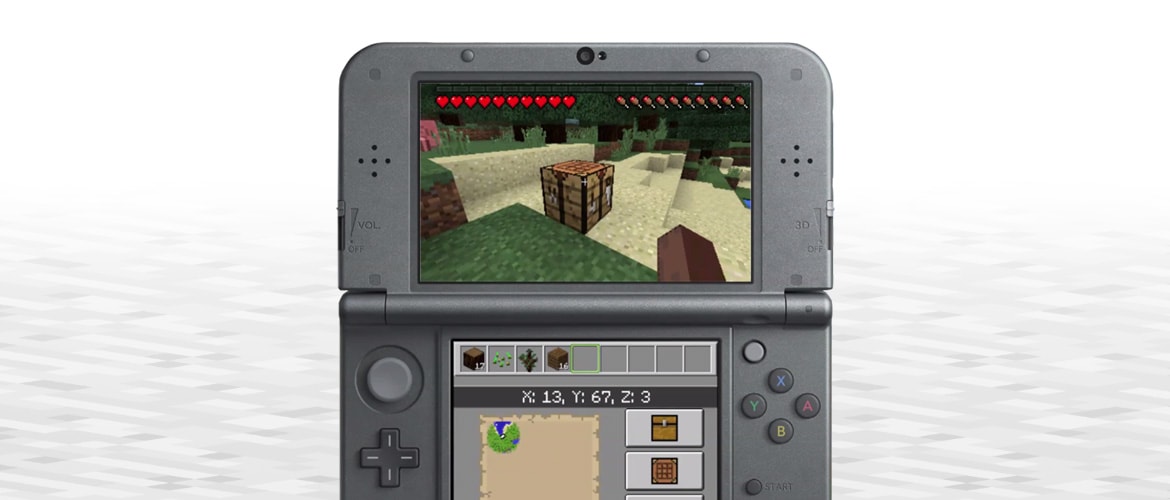
The Minecraft 3DS Community has released an unofficial update 1.10 for Minecraft: New Nintendo 3DS Edition, introducing true online multiplayer for the first time in this version's history. Official support for the Nintendo console edition ended back in 2018 with update 1.9, so fans have been waiting nearly eight years for online play.
What the Fan Update 1.10 Changes
The project, whose features were described on the GBAtemp forum by a user going by HPR, adds peer-to-peer connections and online servers, something the original game from Mojang never had. Since 2018, Minecraft on 3DS only offered local multiplayer limited to two players over an ad-hoc connection, so adding an online mode is the biggest change in this port's history.
The update also removes the previous world size limit of 2016 by 2016 blocks, introducing infinite worlds generated on the fly, and the maximum build height has increased from 128 to 256 blocks. Command blocks and chat have also been brought back, features the console version never got, opening the door to minigame maps and server rules built by the community, similar to what's seen on Java and Bedrock servers.
Crossplay with Java 1.12 and Pocket Edition 1.1.5
The most interesting part of the update is an SMP server connecting 3DS players with users of Minecraft Java Edition version 1.12 and Pocket Edition version 1.1.5. This works thanks to a shared, compatible protocol from older releases of the game, so don't expect crossplay with the latest snapshots like 26.3 or the current Bedrock Edition 26.62, just with versions matching the era when the console port was made.
The update also goes back to its hardware roots: it adds support for the original Nintendo 3DS and 2DS, which Mojang never formally supported, since New Nintendo 3DS Edition was written for the more powerful processor of the newer console model. On top of that, there's a removed mob limit, usable maps, button remapping, extra graphics options, and general performance fixes.
History of the Console Port
Minecraft: New Nintendo 3DS Edition launched on September 13, 2017, announced during a Nintendo Direct, as a version based on the Bedrock engine but limited to New 3DS and New 2DS hardware. The game got local two-player multiplayer in update 1.4 in March 2018, and the final update 1.9 from the same year added, among other things, woodland mansions, explorer maps, concrete, glazed terracotta, shulker boxes, and llamas, pillagers, and evokers from the Nether Update.
After that update, Mojang shut down development of the port for good: the game disappeared from the eShop and for years has only worked for people who bought it beforehand or own a physical cartridge copy. For players in Poland, it's mostly a nostalgia topic, since official sales of the game on 3DS ended along with console support, and most of the community moved to Bedrock Edition or Java Edition on PC and new-generation consoles.
How Modding Works on a Locked-Down Console
Fan-made updates for the game on 3DS require the console to first be unlocked through homebrew custom software, since Nintendo never provided official modding tools for this edition. The community distributes such projects through the independent Universal Updater store, as part of what's known as the MC3DS Unistore, where patches, textures, and now a full-fledged online mode end up.
This isn't the first attempt to add online multiplayer to this version of the game. An earlier project, MC3DS-Multiplayer-Mod by developer Cracko298, aimed to offer a similar feature over WiFi, but it was abandoned, and its GitHub repository was archived. The new update 1.10 is the first project to actually get online play to the stage of a public release.
What's Next for the Project
The authors announced on the GBAtemp forum that the update will be added to Universal Updater, from where players can install it directly onto a properly set up console. As TweakTown reports, the project is being further developed by the Minecraft 3DS Community, which also runs a Discord channel for people wanting to report bugs or join testing of future versions.
It's worth remembering that using such modifications requires owning a legally purchased copy of the game and unlocking the console yourself, and the update itself doesn't replace buying the original. For fans of the old hardware, though, it's a rare chance to return to the 2017 game and play it online for the first time, instead of being limited to local play with two consoles sitting side by side.
