
 4 min read
Minecraft will be blocked on school computers and tablets across the Seattle Public Schools district starting Monday, November 9, 2026. The decision covers students from elementary school through high school and is part of a broader plan to limit technology in classrooms, which also affects YouTube and artificial intelligence tools, including Google's Gemini.
What exactly changes starting Monday
The district, one of the larger ones in the US, is introducing a Minecraft block for all grade levels, with the exception of "rare, approved curricular cases," as stated in a notice quoted by local station KUOW. In practice, this means a teacher can still teach things like coding basics or construction using the game if it's registered as part of a lesson, but free play during breaks or as a "reward" after finishing work is no longer allowed.
Along with Minecraft, YouTube is also getting blocked, for all students from kindergarten through fifth grade. Gemini and other unapproved AI tools are being blocked as well at all grade levels, along with AI-generated summaries in Google Search. According to KOMO News, this comes after the district discovered a "loophole" students were using to get around the earlier AI ban for grades 1-2.
Screen time limits coming in January
The changes don't stop at app blocks. Starting January 2027, students in grades 3-5 will lose one-to-one access to school laptops, and daily screen time will be capped at 60 minutes, not counting time spent on tests and quizzes. For kindergarten through second grade, a similar limit, 30 minutes a day without personal tablets, has already been in effect under earlier changes.
- Grades K-2: maximum 30 minutes of screen time per day, no one-to-one tablets
- Grades 3-5: starting January 2027, a 60-minute daily limit, no one-to-one laptops
- Devices cannot be used as a reward or during free time
- Time spent on tests and quizzes doesn't count toward the limit
Arguments from district officials and parents
Superintendent Ben Shuldiner explained the decision as a need to rethink a system that "was heavily shaped by pandemic realities," as quoted by KUOW, and in which the district "didn't have the space to think through what had actually been good about it." Dr. Mike Starosky, quoted by KOMO News, emphasized that "learning comes first," and that the new guidelines give teachers "a consistent framework for making thoughtful decisions about when technology adds value to a lesson and when students are better served by direct instruction, discussion, books, writing, hands-on experience, and collaboration."
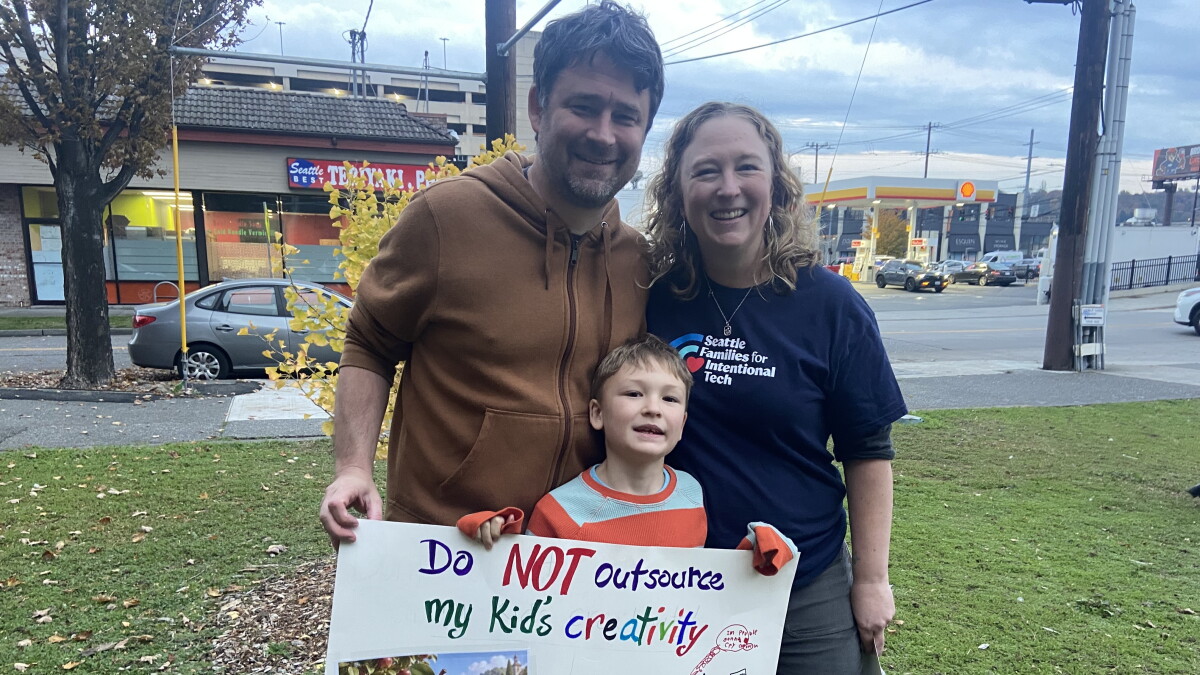
Pressure for the changes also came from a parent group called Seattle Families for Intentional Tech, which called for more thoughtful rules around children's creativity and data protection. Not all parents, however, are happy with the pace and manner in which the changes were introduced. Erica Shutes-David, quoted by KOMO News, said: "I was told that's just how it is. That wasn't enough for me. I wanted to know what data was behind it, and I eventually decided to pull my son out of the program."
Minecraft in school isn't just entertainment
For many teachers around the world, Minecraft has long been a teaching tool, not entertainment. Microsoft has been developing a separate educational version of the game, Minecraft Education, since 2016, used to teach coding, geometry, and teamwork, and Polish computer science teachers just as often use the regular Bedrock Edition of the game for extracurricular activities. Seattle's decision doesn't directly affect this dedicated educational platform, but rather the regular copies of the game installed on school hardware, which explains the exception written into the new rules for "approved curricular cases."
In Poland, the topic of games' influence on children and teenagers has stirred political emotions for months, with Minecraft sometimes cited in that debate as an example of a popular but misunderstood title. The American case shows a different tone within the same discussion: Seattle isn't claiming the game is dangerous in itself, only that excessive screen time and unrestricted access to platforms cuts into time for reading, writing, and teamwork in the classroom. That distinction, subtle as it is, completely changes the character of the discussion around the same game.
What's next for technology in Seattle classrooms
The district says the next step will be rolling out screen time limits for grades 3-5 in January 2027, with further decisions on whether to expand or loosen the rules depending on how the current model works out in practice. For now, it's unclear whether other large school districts in the US will follow Seattle's lead and introduce similar Minecraft blocks on school hardware.
