
 4 min read
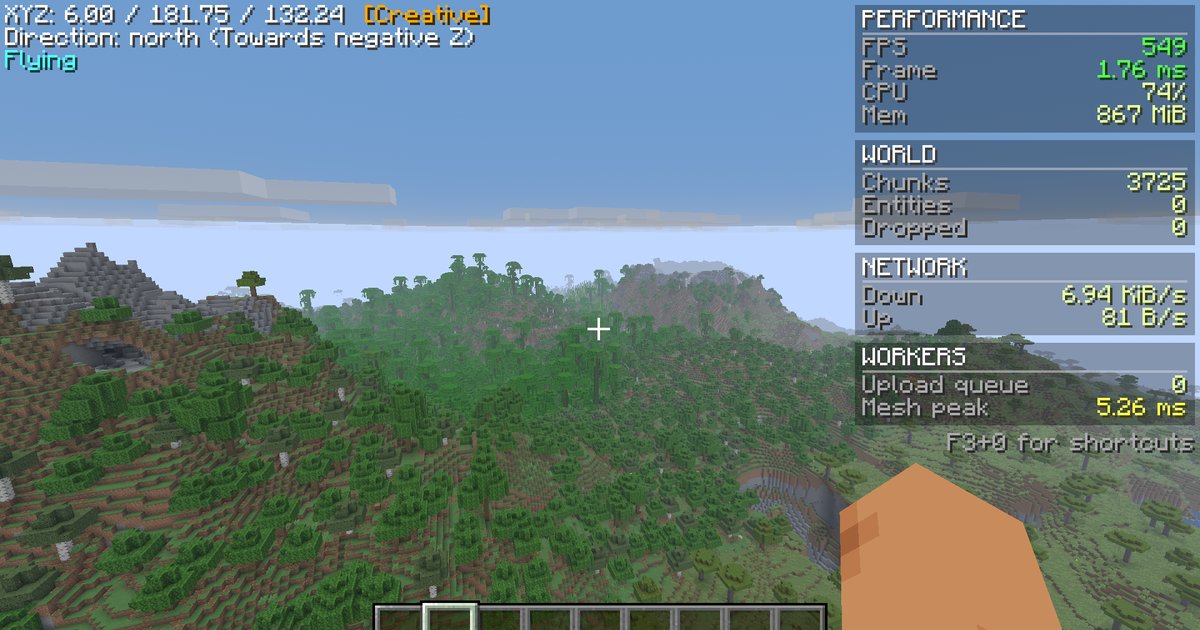
Minecraft has gotten a new independent client called Torch, written from the ground up in the Rust programming language. The open source project does away with the need to run a Java virtual machine (JVM) and, according to its creators, hits 400 FPS versus 180 FPS on the classic Java client, while using about 700 MB of RAM compared to 2.3 GB. The news was reported by Hacker News, and the source materials can be found on the project's website and in its GitHub repository.
What replacing the JVM with Rust actually changes
The official Minecraft Java Edition client runs on the Java virtual machine, which has been criticized for years over memory overhead and delays caused by garbage collection. Torch solves this by rewriting the entire rendering engine and game logic in Rust, a natively compiled language with no intermediate virtual machine layer. According to the creators on the torchclient.com website, this lets the game launch in about a second, compared to four seconds for the Java client.
The project supports two game versions in a single build: 26.1.1 and 1.21.11, meaning players don't have to download separate packages for different server versions. That matters for people playing on servers that, for various reasons, haven't updated to the latest release. Torch's source code is publicly available in the torch-client repository on GitHub under the GNU AGPL 3.0 license, meaning anyone can download, verify, and modify it.
Features already available in the alpha
Despite being in an early stage of development, Torch already offers some features known from popular performance optimization mods. The project's documentation lists, among other things, a built-in overlay showing FPS, RAM and CPU usage, and the number of loaded chunks, which is reminiscent of the diagnostic tools found in the tools and calculators section for Minecraft players.
- Partial support for Iris shaders
- ClickGUI triggered with right Shift
- Touch controls on Android devices
- HUD interface editor
- Render distance of up to 32 chunks
The creators themselves note on the project's website that this is an early release: "Torch is in an early stage of development. Some features are still missing, and others may crash." That's a standard warning for alternative clients, worth keeping in mind before installing it on a computer used for work or school.
Platforms and installation
Torch currently runs on three platforms: Windows 64-bit, Linux x86_64, and Android arm64. Prebuilt binaries for Windows and Linux are published on the GitHub repository's releases page, and anyone interested can also build the client themselves using Cargo, Rust's standard package manager. For comparison, the official client is available through the Minecraft Java Edition download page, where Mojang provides the launcher, which requires a purchased license for the game.
It's worth stressing that using alternative clients like Torch doesn't remove the requirement to own a legally purchased copy of Minecraft. Torch only recreates the client layer, logging in to the same Microsoft accounts as the official launcher, so without a valid account the game simply won't start.
Similar projects in the Rust and Minecraft community
Torch isn't the first project attempting to replace the official Java client with an engine written in another language. On GitHub, other projects being developed in parallel include Pomme, a Java Edition client written in Rust and Vulkan that connects to servers from version 1.20 up to 26.3, and Rustcraft, which recreates both the client and an integrated server for version 26.3 in Rust. The developer community is happy to experiment with rewriting Minecraft's code, since the game has an open, well-documented network protocol, which makes it easier to write compatible clients from scratch.
For Polish players using servers listed on the Minecraft servers page, the key question is whether server administrators will allow traffic from such clients, since some anti-cheat systems verify the signature of the official launcher. The Torch project doesn't currently mention certification or cooperation with the creators of popular anti-cheat plugins, so players using it on servers with strict security measures should be prepared for possible bans.
What's next for the project
The torch-client repository on GitHub currently has a modest number of stars and hasn't yet gathered a wider group of contributors, but the Hacker News submission titled "Show HN: Torch" caught the attention of part of the community interested in Rust and game optimization. The creators encourage people to report bugs and suggest new features through GitHub's Issues system, which is a typical development path for small open source projects in an early stage.