
 5 min read
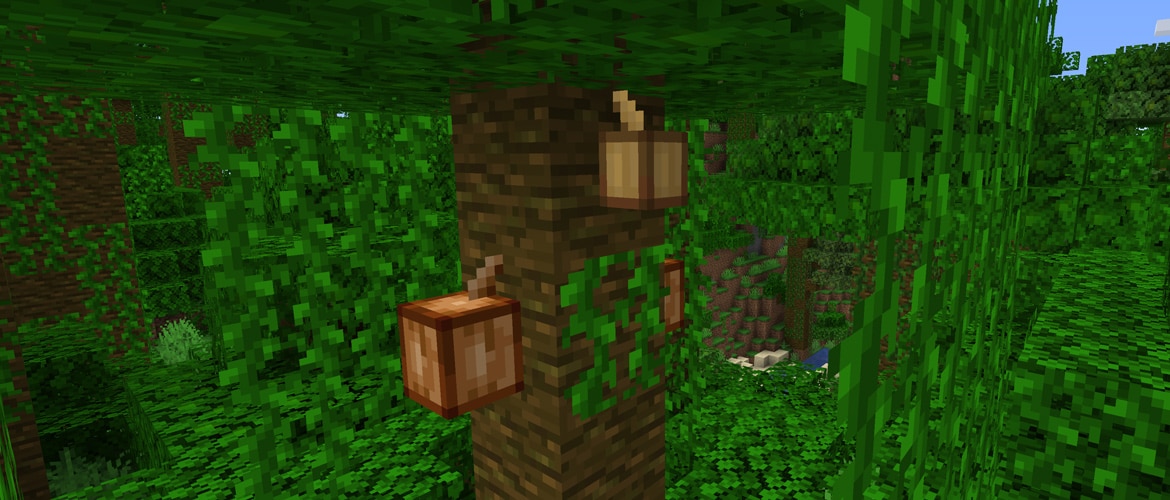
Brown Dye in Minecraft is made from a single Cocoa Bean, which you place in any slot of the crafting grid. There's no flower that produces this color, and you can't mix it from other dyes, so everything starts with cocoa from the jungle. Below you'll find the recipe, where to get cocoa, how to farm it, and a list of uses.
- Recipe: 1 Cocoa Bean gives 1 Brown Dye.
- Cocoa grows on Jungle Wood logs in the Jungle and Sparse Jungle.
- A mature pod gives 3 beans, and the farm is easy to build next to your house.
- The Wandering Trader sometimes sells 3 Brown Dye for 1 Emerald.
Brown Dye recipe and where to get cocoa
According to the Brown Dye page on Minecraft Wiki, the only recipe is Cocoa Beans in the crafting grid. Brown Dye has been a separate item since Java version 1.14. Before that, Cocoa Beans themselves served as the dye.
You can't make brown from a Brown Mushroom, Dirt, or by combining red and green dye, like you would when mixing real paint. None of those recipes exist in Minecraft, so without cocoa or the Wandering Trader, you simply won't get the brown color.
Cocoa pods grow naturally on Jungle Wood logs in the Jungle and Sparse Jungle. They only appear on trees generated with the world, not on ones grown from saplings. You can break a pod with any item, fastest with an axe, and a fully grown pod gives 3 Cocoa Beans. The Luck enchantment doesn't increase this number.
Bedrock Edition has two more sources. Beans can be caught fishing in jungle biomes, and 40% of starter chests contain 1-2 Cocoa Beans. The Wandering Trader also sells Brown Dye: if it has this offer, it gives 3 for 1 Emerald.
How to farm cocoa near your base
You plant Cocoa Beans on the side of a Jungle Wood log or its stripped version. The log doesn't have to be part of a tree, so you just need to bring a few Jungle Wood blocks from the jungle and place them near your house. As described on the Cocoa Beans page, a pod has three growth stages: small and green, bigger and light brown, and finally large and orange.
On every random tick, a pod has a 20% chance of advancing to the next stage, which averages out to 5 minutes and 41 seconds per stage. In Java Edition, Bone Meal speeds up growth by one stage per use. Only harvest orange pods, since younger ones give fewer beans.
A column of Jungle Wood logs planted with cocoa on all four sides is the simplest farm. More elaborate designs are covered in our Cocoa Farm guide, and with surplus beans you can also make Cookies.
What to use Brown Dye for
Brown Dye works like any other color in the game. It's most often used in these recipes:
- Wool and Sheep: a dyed Sheep gives 1-3 blocks of Brown Wool when sheared,
- Terracotta, Glass, and Carpets: 1 dye and 8 blocks give 8 colored blocks,
- Concrete: dye, Sand, and Gravel give Brown Concrete Powder, which turns into concrete when it touches water,
- beds, Candles, banners, Shulker Boxes, and leather armor,
- Firework Stars, collars of tamed Wolves and Cats, and text color on Signs.
Dyeing Sheep is the most worthwhile use. One dye permanently changes a Sheep's color, and the regrown Wool already has the brown shade, so a single Sheep gives you Wool every time you shear it again. The dye also comes in handy at the loom, where you can apply brown patterns to a banner.
Any extra dye can be traded for Emeralds. Since Java version 1.14, Shepherd villagers, meaning villagers working at a loom, can buy Brown Dye in exchange for Emeralds. In Bedrock Edition the same trade was added in version 1.11.
Starting with version 26.3, Brown Wool and concrete will also be used for new stairs and slabs, and Brown Dye appears in the recipe for Cushions, which you can sit on. You can read more about these blocks in the article Minecraft 26.3 Wilderness Bound.
Brown Terracotta also occurs naturally in the Badlands, so you don't always need to dye blocks for large builds. You'll find a full list of colors and recipes in our guides Dyes in Minecraft and how to make dyes.
Brown Dye in Bedrock Edition
In Bedrock Edition, Cocoa Beans can still replace Brown Dye in many recipes, so you often don't even need to craft them into dye. Bedrock also lets you dye water in a cauldron and dip items into it, for example leather armor. Brown Dye also comes in handy there for dyeing Shulkers, as well as balloons and glow sticks in Education Edition.
