
Terracotta: recipe, colors and glazed patterns
Terracotta in Minecraft is clay smelted in a furnace: a sturdy block available in 16 dyed colors. It generates naturally in Badlands biomes, and you get the plain version by smelting ordinary clay. Dyed terracotta, and glazed terracotta in particular, are some of the best decorative blocks in the game, great for floors, mosaics and facade patterns.
What terracotta is
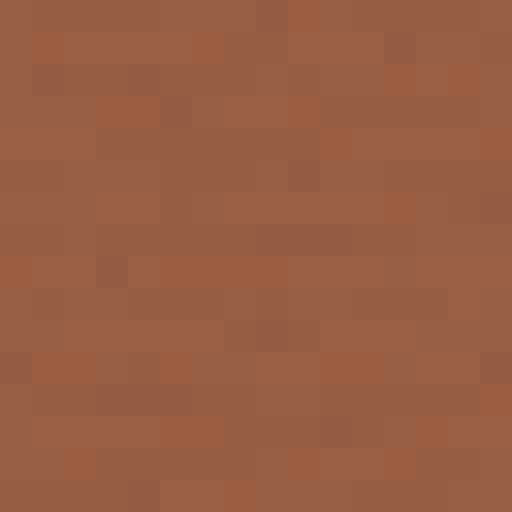
Terracotta (formerly called Hardened Clay) is a solid building block you get by smelting ordinary clay in a furnace. It looks like fired ceramic: the plain version is a warm orange-brown with a smooth, uniform texture and no seams.
Unlike raw clay, terracotta can be dyed in any of 16 colors. In the game it sits between natural and decorative materials: tough enough for the walls of a base, and good-looking enough for details, mosaics and facades.
| Property | Value |
|---|---|
| Former name | Hardened Clay |
| Hardness | 1.25 |
| Blast resistance | 4.2 |
| Tool | Pickaxe (any tier) |
| Stack size | 64 |
| Flammability | Non-flammable |
| Editions | Java, Bedrock, Pocket Edition |
Terracotta is completely non-flammable, so neither fire nor lava will set it alight. You need a pickaxe to collect it: breaking it by hand destroys the block with no drop.
How to get terracotta
There are two main ways to get terracotta: mine it where it generates naturally in the Badlands, or smelt clay in a furnace. Which one is better depends on what you need: a mix of colored bands, or a single material in the exact color you want.
Mining it in the Badlands
The Badlands biome (formerly Mesa) is where terracotta generates naturally. The hills are built from bands of colored terracotta: orange, white, brown, red, yellow and light gray. You usually find six or seven colors in the bands.
- Where to look: Badlands, Wooded Badlands and Eroded Badlands, the warm, dry regions of the world
- What you collect: colored terracotta blocks that are already dyed (no smelting or dyeing needed)
- Bonus: gold veins show up among the terracotta layers much closer to the surface than in other biomes
A single trip to the Badlands gets you hundreds of colored blocks. If one is within reach of your base, it is the fastest way to collect a large batch of terracotta.
Smelting clay
The second option is to smelt clay blocks in a furnace yourself. You find clay blocks on the sandy beds of rivers, lakes and oceans, and in the Lush Caves biome. One clay block gives you one block of plain terracotta, ready for dyeing.
Smelting clay in a furnace
This is the simplest recipe in the game: all you need is a clay block, some fuel and a regular furnace. Step by step:
- Get clay: dig up clay blocks with a shovel on the shore of a river, lake or ocean. Lush Caves also have sizeable deposits.
- Place a furnace: the standard stone furnace. A blast furnace does not work with clay, because it only smelts ores and metal gear.
- Put the clay in the top slot.
- Add fuel in the bottom slot: coal, charcoal, logs, planks, a lava bucket or a block of coal.
- Wait about 10 seconds per block. The finished terracotta appears in the output slot on the right.
Best fuel for smelting
| Fuel | Items smelted per unit |
|---|---|
| Block of coal | 80 |
| Lava bucket | 100 |
| Coal / charcoal | 8 |
| Wooden planks | 1.5 |
| Stick | 0.5 |
A lava bucket is the most efficient fuel: one bucket smelts 100 clay blocks. When you are producing terracotta in bulk for a build, that saves both time and fuel.
Terracotta colors: 16 variants
Plain terracotta comes out of the furnace in a warm orange-brown. You can dye it with any of the 16 Minecraft dyes to get a full palette of decorative colors.
Dyed terracotta recipe
You dye terracotta in a crafting table, using the 3×3 grid:
- Place 8 terracotta blocks around the center slot.
- Put 1 dye of the color you want in the middle.
- You get 8 blocks of dyed terracotta in that color at once.
It is very efficient: one dye colors 8 blocks. For comparison, dyeing wool takes one dye for every block separately.
The full 16-color palette
| Color | Name |
|---|---|
| White | White Terracotta |
| Orange | Orange Terracotta |
| Magenta | Magenta Terracotta |
| Light blue | Light Blue Terracotta |
| Yellow | Yellow Terracotta |
| Lime | Lime Terracotta |
| Pink | Pink Terracotta |
| Gray | Gray Terracotta |
| Light gray | Light Gray Terracotta |
| Cyan | Cyan Terracotta |
| Purple | Purple Terracotta |
| Blue | Blue Terracotta |
| Brown | Brown Terracotta |
| Green | Green Terracotta |
| Red | Red Terracotta |
| Black | Black Terracotta |
Dyed terracotta has more muted, earthy shades than wool or concrete in the same color. That makes it a great material for Mediterranean-style facades, old towns and any decoration that should look earthy. If you need cleaner, stronger colors, consider concrete instead.
Glazed terracotta
Glazed terracotta is a unique decorative variant, added in Java Edition 1.12 and available in all 16 colors. Each color has its own ornate pattern that looks like a ceramic tile. Place several blocks next to each other and they form repeating mosaics, ideal for floors and walls.
How to make glazed terracotta
The recipe is very simple: smelt dyed terracotta in a furnace. The color of the terracotta decides the pattern.
- Make dyed terracotta in any of the 16 colors (recipe above).
- Put the colored terracotta in the top slot of the furnace.
- Add fuel.
- After 10 seconds you get glazed terracotta in the same color, with its own pattern.
Important: glazed terracotta cannot be dyed again. Once it is smelted, its color and pattern are fixed, so plan the pattern ahead of time.
Rotating and laying patterns
Glazed terracotta faces the direction you are looking when you place it. That lets you rotate a block by 90, 180 or 270 degrees and lay it in any orientation. Place a 2×2 group of blocks in four different rotations and you get a symmetrical, kaleidoscopic pattern, the basis of decorative floors and mosaics.
Hardness
Glazed terracotta is a little harder to break than regular terracotta: hardness 1.4 vs 1.25.
Building with terracotta
Terracotta is one of the most versatile decorative blocks in Minecraft. A few proven uses:
Facades and walls
Plain walls of dyed terracotta in earthy shades (brown, orange, red, light gray) recreate Mediterranean, desert and Spanish or Mexican-inspired architecture really well. Combine them with acacia wood and sandstone for a Badlands feel.
Mosaic floors
Glazed terracotta in a 2×2 layout with different rotations makes kaleidoscopic patterns. Over a larger area you can build a floor that looks like the mosaic in a 19th-century townhouse, a Moroccan rug or a stained glass window. It is the most popular use of glazed terracotta among builders.
Colorful accents
Single blocks of glazed terracotta used as decorative bricks against a plain stone or wood wall add character without overdoing it. It works well in houses, taverns and smithies.
Pixel art and map art
With 16 colors in muted shades, terracotta is a favorite material for pixel art and map art. Its palette has more earthy tones than wool, and it handles skin, hair and natural textures better.
Roofs
Red and orange terracotta is the classic choice for Mediterranean roof tiles. Combined with sandstone stairs and slabs it gives a very readable, realistic look. Glazed variants in the same colors work well as accents on the ridge.
Frequently asked questions (FAQ)
Is terracotta blast resistant?
Terracotta has a blast resistance of 4.2. That is higher than most decorative blocks (wool: 0.8, planks: 3) but lower than stone (6). A single TNT explosion will destroy terracotta at close range. It is not a material for protecting yourself from Creepers: use stone, obsidian or deepslate for that.
How is terracotta different from raw clay?
A clay block is soft and drops 4 clay balls when you break it. Terracotta is the smelted, hardened version: rigid, durable, a warm orange-brown, with a blast resistance of 4.2 (vs 0.6 for clay). Smelting only goes one way: you can turn clay into terracotta, but not the other way around.
Can I change the pattern on glazed terracotta?
Each color has one fixed pattern. You cannot change the pattern for a given color, you can only rotate the block by 90 degrees when you place it. To get varied patterns, mix different colors of glazed terracotta.
Does terracotta burn in lava?
No. Terracotta is completely non-flammable: it will not catch fire, even in contact with lava. That is one reason it works well in underground bases and in builds near lava.
Which pickaxe do I need to mine terracotta?
Any pickaxe works: wooden, stone, iron, diamond or netherite. There is no tier requirement. Breaking it by hand destroys the block without a drop, just like stone.
How many clay blocks do I need for a full stack of terracotta?
64 clay blocks (one full stack) make 64 blocks of terracotta. Smelting them one after another takes about 640 seconds, at 10 seconds per block. One lava bucket is enough for a full stack, with plenty to spare.
Is terracotta in Bedrock and Pocket Edition?
Yes, it exists in every edition of Minecraft: Java, Bedrock, Pocket Edition and consoles. Glazed terracotta is available everywhere too.