
 4 min read
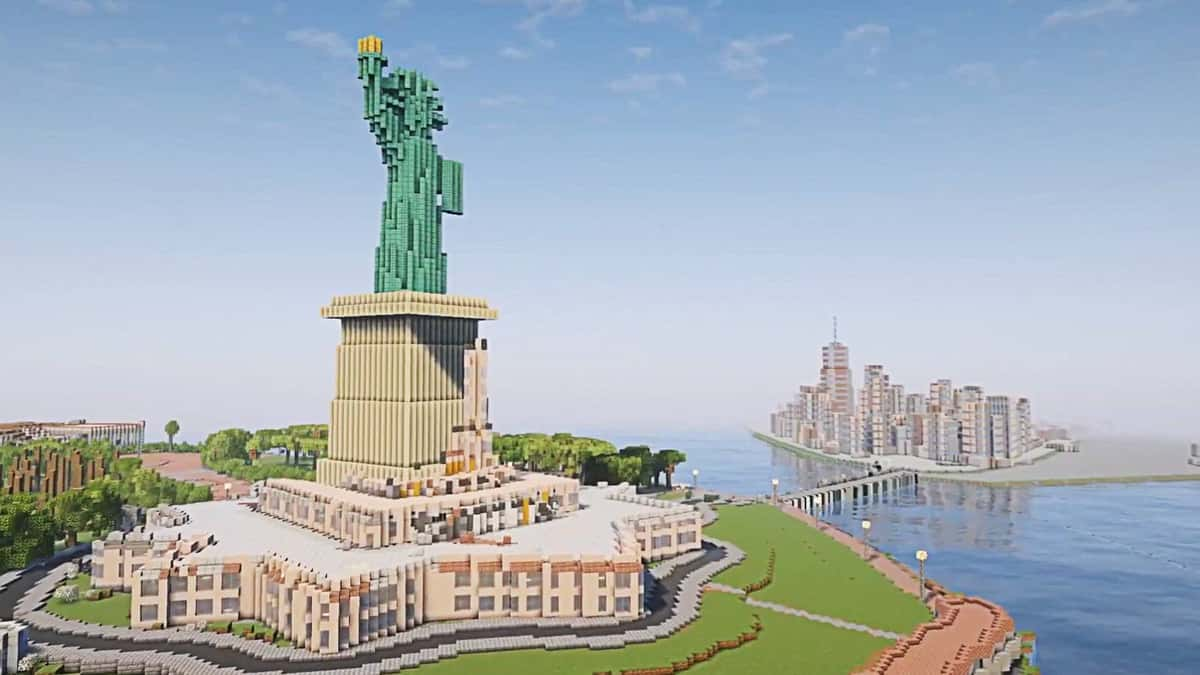
Minecraft has gained a server called WorldCraft, which recreates the entire Earth at a 1:1 scale using artificial intelligence trained on map data. The project, announced on November 16, 2026 by developer Thijs Simonian (known online as cdngdev), lets you type in a real address and visit your home, school, or street, all rebuilt in a world made of blocks.
How the world is generated on demand
WorldCraft isn't one giant, pre-built map, the way community servers usually work. Instead, locations are created on demand, the moment a player reaches them. The system combines elevation data responsible for terrain shape, open map data providing road layouts and building outlines, and 3D aerial imagery that's used to determine the shape and color of roofs.
As Simonian explained, the generator uses a method he calls "programmatic learning" rather than classic deep learning, and over 250 AI agents worked on fine-tuning the algorithm for different regions of the world. Importantly, buildings aren't added to the game from the outside only: the engine also creates furnished interiors, although their accuracy compared to real homes can be limited.
Why you can't just build everything at once
The project's creator admitted that generating the entire planet upfront would require about two petabytes of storage, which is completely unfeasible even for a large server. Generating on demand solves this problem, at the cost of parts of the world simply not existing yet until someone visits them.
That comes with a price in stability, though. According to reports from Dexerto, within a few hours of launch WorldCraft was already experiencing overload and performance drops caused by the massive wave of players searching for their own neighborhoods. The launch started first in the United States, with worldwide access restored shortly after. Full data for Australia and New Zealand is still missing, so players from those regions won't be able to see their homes in full detail just yet.
WorldCraft vs. manually building Earth
The project fits into a broader trend of recreating the real world in Minecraft, known previously mainly from the Build The Earth initiative, where hundreds of volunteers have spent years manually placing block after block to build city after city, as seen with many Polish locations built by BTE Poland. WorldCraft takes a completely different approach: instead of precision and detail crafted by human hands, it focuses on scale and speed. The algorithm generates a street or district in a moment, though the result tends to be more simplified than structures recreated by experienced builders.
For players, these are two different philosophies of play on the same theme. Manual projects like Build The Earth offer faithful, polished reconstructions of specific, carefully chosen locations, while WorldCraft offers instant access to practically any point on the map of the world, even if that means less precise detail.
How to join the server
To see your own neighborhood, you'll need Minecraft: Java Edition version 26.2 or newer. After joining the server at worldcraft.gg, players type the command /go [address], and the engine generates the surrounding area for that location. For those who want to check out the project without registering on the server, the author has also released a standalone map file covering San Francisco, weighing about 6 GB, which can be loaded locally.
According to accounts from players cited by Dexerto, the server's first hours were filled with posts about finding old schools, childhood homes, and streets, which turned out to be an unexpectedly emotional experience for many. This shows that even a simplified, automatically generated reconstruction of the world can trigger stronger reactions than standard survival gameplay, once recognizing your own surroundings comes into play.
WorldCraft remains a project developed without Mojang's support, so its future depends entirely on the creator's decisions and the resources he manages to secure to keep the server running amid such huge interest.
