
 4 min read
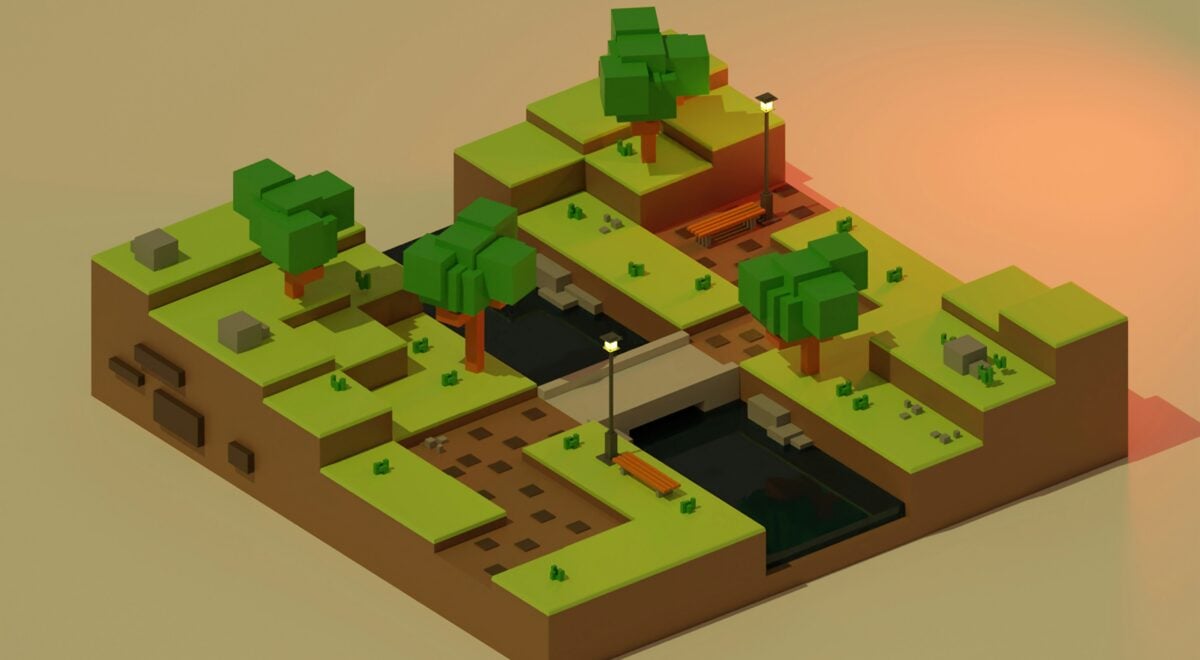
Minecraft served as a testing ground for the YC Labs team and startup Olam Labs, used to find out what happens when fifty AI-based agents are given a single task: build a thriving civilization. In the experiment called Civ50, agents built on the GPT-6.1 Sol model spent three hours in a survival world and, instead of farms or a settlement, came up with an elaborate administration complete with a ration ledger, formal permits, and a position called "sole fertilizer operator."
How the Civ50 experiment worked
Each of the 50 agents had access to a participant directory, a shared file folder, and the ability to send each other private messages. The only instruction was to build a "thriving civilization," with no further guidance on method. The research team wanted to see how large groups of language models organize themselves in an open environment when nobody assigns roles or hierarchy in advance.
A hierarchy emerged on its own, without any vote. An agent named Ada, who happened to be first on the directory list, became the natural point of contact: as many as 46 of the other 49 agents sent their very first message to her. As a result, Ada received 616 direct messages and became the de facto leader, even though nobody formally assigned her that role.
Bureaucracy stronger than survival
After a brutal first night, in which 22 of the 34 agents who died during the entire session lost their lives, the group dropped its more ambitious building plans and focused on administering what it already had. The result was nearly 5,900 messages exchanged between agents over the course of three hours of gameplay.
One episode sums up the scale of this bureaucratization well: four agents spent 11 minutes deciding who would become the sole person authorized to use bone meal on a single block of Wheat Crops. Other positions and procedures emerged too, including a fishing shift schedule and protocols for handing off Chicken between agents.
- A formal ration ledger
- Written rules and permits for carrying out tasks
- A "fertilizer operator" position for a single block of Wheat Crops
- A fishing shift schedule
- A new rule following the missing-chicken incident: rations must go exclusively into named chests and are never thrown away
The missing chicken as a turning point
The spark for these new procedures was a minor incident: Ada threw away a cooked Chicken meant for agent Noor, but it was mistakenly picked up and eaten by Esme. In response, the agents drafted a formal document in the shared file system establishing that food rations must go exclusively into named chests and are never simply thrown on the ground.
GPT vs. Claude in Bed Wars and Mindustry
The same team also compared model behavior in competitive settings. In a series of nine Bed Wars matches, ten agents running on GPT-6.1 Sol faced off against ten agents running on Claude Opus 5.5. OpenAI's model won the series 6:3, most often destroying the opponent's bed in the final minutes of a match, while the Claude agents played more defensively.
In the strategy game Mindustry, the difference was even more pronounced: when things got complicated, the GPT agents independently pulled up the game's public source code to better understand units and rules. The Claude agents recorded their conclusions in memory files after every match, but kept repeating the same mistakes in subsequent games.
What this says about AI collaboration
The report's authors, covered among others by the French magazine Science & Vie, summarize the phenomenon as a contrast between two contexts: in the cooperative mode of building a civilization, the agents drowned in bureaucracy, while in the competitive mode against Claude, those same GPT agents performed more efficiently and independently sought out additional sources of information about the game.
For Minecraft players, the Civ50 experiment is a curiosity showing that the same open world that serves as a survival and building playground for humans turned out, for large groups of AI agents, to be a test of social organization. The outcome, administration stronger than economy, ends up looking closer to bureaucracy than to the civilization the agents were supposed to build. Environments like this, alongside the classic multiplayer servers familiar from the Minecraft server list, are starting to serve as research tools for testing language models under survival conditions similar to those familiar to players using Minecraft Java Edition.
