
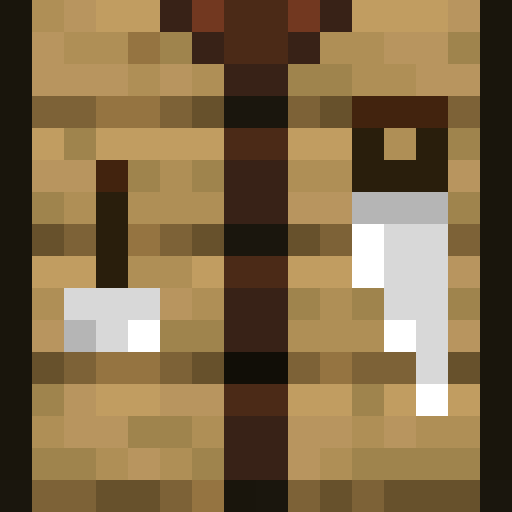
Crafting basics
The crafting table, recipes and the material tiers: the foundation of everything you do in Minecraft.
Crafting is the very heart of Minecraft. Almost every item in the game has to be made by hand from resources arranged in the right pattern on a crafting table. Understanding how crafting works is the key to making progress: without it you can't make tools, weapons, armor, torches or any of the hundreds of other useful items. If you're just starting out, this chapter teaches you everything you need to get going. Once you've got the basics down, move on to our full crafting guide with hundreds of recipes.
The crafting table: your workstation
The crafting table is the first and most important item you should make. You craft it from 4 planks arranged in a 2x2 grid in your inventory window. Once you place it on the ground (right mouse button), it gives you a 3x3 grid where you arrange resources in set patterns called recipes. You open it again with the right mouse button.
Newer versions of the game (1.12+) have a Recipe Book: the green book icon next to the crafting grid. Click it to see a list of all the recipes you know. New recipes unlock automatically when you get a new resource. For example, the first time you pick up an iron ingot, the recipes for the iron pickaxe, sword, shovel and other items unlock.
Keep in mind that your inventory window (the E key) has a small 2x2 grid for crafting simple items like planks, sticks or torches. To make tools, weapons and most advanced items, though, you need the full 3x3 grid of a crafting table.
The most important recipes to start with
Below you'll find the key recipes you should know from your first minutes in the game. Each one opens the way to the next possibilities:
Planks
1 log of any wood = 4 planks. This is the most used material in the whole game. Planks are the base of most recipes, and they also serve as a building material and as fuel for a furnace.
Sticks
2 planks placed vertically = 4 sticks. You need them for tools, weapons, torches, ladders, fences, signs and many other items. Always keep a big supply.
Crafting Table
4 planks in a 2x2 grid = 1 crafting table. The first item you should make: it gives you the full 3x3 grid and access to hundreds of recipes.
Pickaxe
3 pieces of material (planks, cobblestone, iron, gold or diamond) across the top row + 2 sticks below the middle one. You need it to mine stone, ores and hard blocks. Without a pickaxe, you won't get any further than wooden tools.
Shovel
1 piece of material on top + 2 sticks below it (in a vertical line). It speeds up digging dirt, sand, gravel, clay and snow. Underrated at first, but very useful for building and digging tunnels.
Axe
3 pieces of material (2 side by side at the top + 1 below) + 2 sticks. It chops wood faster and deals more damage per hit than a sword (but attacks more slowly). In Java Edition the axe is often used as an alternative weapon to the sword.
Sword
2 pieces of material in a vertical line + 1 stick below. The basic weapon for fighting hostile mobs. A sword attacks faster than an axe and has a special area attack (the sweep attack) in Java Edition.
Torch
1 coal or charcoal above 1 stick = 4 torches. A torch gives off light level 14 and effectively stops hostile mobs from spawning. In caves, place one every 5-6 blocks.
Furnace
8 cobblestone around the edge of the 3x3 grid (with the center empty) = 1 furnace. You use it to smelt metal ores, cook food and make materials like bricks or glass. You'll learn more about cooking in the chapter on food.
Chest
8 planks around the edge of the 3x3 grid (with the center empty) = 1 chest. It stores 27 stacks of items. Two chests placed next to each other form a large chest with 54 slots. Keeping your items organized is key, so build chests early and sort your resources.
Tool material tiers
Tools and weapons are made from different materials. They differ in durability (how many uses before the tool breaks), mining speed and the damage a weapon deals. Here's an overview of the materials, from wood to netherite:
Armor: protection from damage
Armor is the second key part of crafting. A full set consists of a helmet, chestplate, leggings and boots, and each piece takes a set amount of material. The chestplate (8 ingots) gives the most protection, the boots (4 ingots) the least. A full iron set reduces damage by about 60%, a diamond one by about 80%. Combine your armor with the Protection enchantment to make yourself as hard to kill as possible.
Early in the game, iron armor should be your priority, since there's plenty of iron in caves and underground. Diamond armor is a long-term goal, and netherite armor takes a trip to the Nether to mine ancient debris.
Other useful items
Besides tools, weapons and armor, it's worth knowing the recipes for a few key items:
- Shield: 6 planks + 1 iron ingot. It blocks attacks while you hold the right mouse button. Especially useful against skeletons and creepers.
- Bow: 3 sticks + 3 string (from spiders). A ranged weapon you need for fighting ghasts in the Nether and for taking out hostile mobs safely.
- Bucket: 3 iron ingots in a V shape. It picks up water and lava. A water bucket is one of the most useful items in the game: it puts out fire, makes obsidian and lets you get down safely from high places.
- Compass: 4 iron ingots + 1 redstone. It points to the spawn point. Useful for finding your way in the early game.
- Bed: 3 wool + 3 planks. Sleep through the night and set your respawn point. Invaluable at every stage of the game.
Tip: Early in the game, your priority should be moving quickly from wood to stone, and then to iron. Stone tools are good enough for your first few hours, but iron tools mine much faster, and iron armor gives you more armor points. Save your diamonds for a pickaxe and a sword, and don't waste them on a shovel or a hoe. You'll find the full list of recipes, including potions and advanced items, in our dedicated guides.
For every recipe in the game, see our complete crafting guide. If you've already mastered the basics, move on to the next chapter on mining resources, where you'll learn at what depth to look for diamonds, iron and other valuable ores.